
Load Testing for Offshore and Marine Industries: A Guide to Lifting Equipment Safety and Compliance
Introduction
Offshore lifting equipment and marine lifting equipment should be able to work safely in harsh operating conditions. Lifting beams, shackles, spreader beams, hoists, winches, davits, pad eyes, and other load-bearing equipment may be subjected to heavy loads, corrosion, vibration, repeated loading, and even varying environmental conditions.
The capability to safely support the designed load might require verification by suitable testing and inspection before critical lifting equipment is put into service or returned to service after maintenance or modification.
Load testing is a process under controlled conditions that is employed to test the performance and load carrying capacity of lifting equipment against a defined load test. It can be used with Lifting Equipment Inspection, documentation, and competent personnel to ensure that important information is provided to ascertain the condition of equipment and to support safe lifting operations.
What Is Load Testing?
Load testing is a predetermined load that is applied to lifting equipment under controlled conditions, and its performance is monitored. The reason is to ensure that the equipment can support the necessary load without intolerable deformation, instability, failure, or other distress indicators.
The test method depends on the type of equipment, rated capacity, design, operating environment, applicable requirements, and manufacturer’s specifications.
Testing can be conducted as part of commissioning, post-installation, or upon substantial repairs or modifications, or as part of a planned inspection and certification program.
Why Is It Important for Offshore and Marine Equipment?
Offshore and marine lifting equipment are frequently in an environment where failure of equipment can have a serious operational and safety impact. Exposure to saltwater may increase the rate of corrosion, and the repetition of lifting cycles may also lead to fatigue and degradation of the components.
A controlled test may give valuable evidence on the performance of equipment with a load applied. It is also able to detect problems that would not be evident through a simple visual inspection.
Testing of equipment involved in critical lifting activities should be part of a larger inspection and maintenance strategy and not regarded as a stand-alone activity.
Types of Equipment That May Require Testing
The lifting equipment of various kinds may demand dissimilar test methods. Typical ones are cranes, overhead lifting systems, mobile lifting equipment, hoists, winches, lifting beams, spreader beams, davits, pad eyes, hooks, shackles, and other load-bearing accessories.
The test load and process needed must be determined based on the design of the equipment, its rated capacity, manufacturer data, applicable standards, and project needs.
The configuration of equipment is also important. A lifting beam, such as one, might need other factors to be taken into account than a crane or winch since loading and connection should be considered as important factors to performance.
Load Testing Equipment and Methods
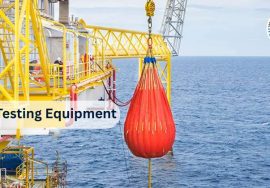
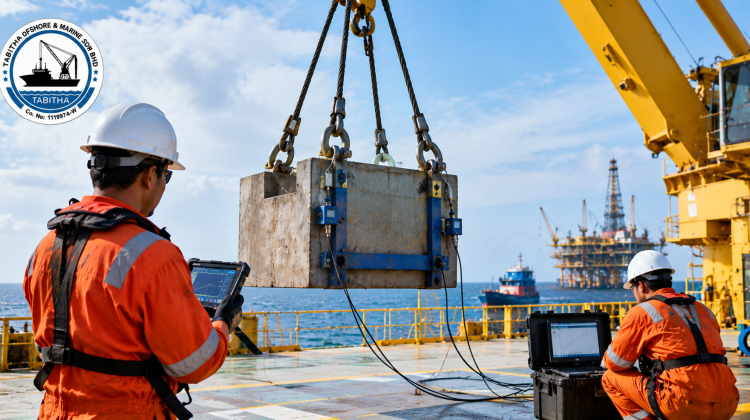
Load Testing Equipment may consist of calibrated load cells, test weights, water weights, hydraulic systems, dynamometers, or other customized systems.
The choice of method will be made based on equipment under test, space available, test load required, environmental conditions, and project needs.
During a controlled test, a measurement of the applied force can be obtained by a load cell. In the event of the use of water weights or test weights, the test set-up needs to be planned and set up properly. Hydraulic systems can also be employed in areas that need control in application of force.
The equipment and test set up must be verified prior to the commencement of testing to ensure that no elements are not unsuitable to the intended loading conditions.
Load Capacity Verification
Load Capacity Verification is used to determine whether equipment can operate within its rated capacity when operating under the designated test conditions.
The test is not something that should be considered as merely using the highest load possible. Before the operation, the required test load, loading sequence, duration, acceptance criteria, and the method of measuring should be determined.
During the test load reading, structural response, deflection, movement, hydraulic pressure, brake performance, or any other equipment-specific parameters may be monitored by the personnel.
Any unusual movement, permanent deformation, abnormal noise, leakage, cracking, and any other unforeseen state must be enquired as per the prescribed procedure.
The Role of Lifting Equipment Inspection
Testing and inspection are complementary and different. Lifting Equipment Inspection might detect observable damage, corrosion, deformation, wear, faulty parts, broken connections, and other formations that may compromise the performance of equipment.
It is possible to find visual or dimensional inspection prior to testing to detect apparent problems to be dealt with before loading. Once the test is done, a subsequent test can be done to identify whether the equipment has acquired any signs of distress or not.
Integrating the results of inspection with test results provides a more comprehensive picture of equipment status.
Safe Lifting Operations and Risk Control
Safe Lifting Operations involve much more than just equipment that passed a test. Factors that can affect the outcome include the lifting plan, load weight, centre of gravity, rigging layout, ground or deck condition, weather, communication, exclusion areas and personnel competency.
The working area needs to be evaluated, and unwanted personnel must be out of the hazardous areas prior to testing or lifting. The test set up must be sufficiently stable, and all connections must be verified prior to loading.
The personnel should also be aware of the possible dangers of suspended loads, stored energy, pinch points, moving equipment, and unanticipated equipment behaviour.
Supporting Lifting Equipment Safety
Lifting Equipment Safety depends on a combination of appropriate design, inspection, maintenance, testing, competent operation, and proper documentation.
Use of equipment must be within its intended capacity and limitations. The equipment, test conditions, test-relevant readings, inspection findings, and final outcome should be identified in inspection and test records.
Documentation that is traceable can assist operators and maintenance personnel in identifying the time when a piece of equipment was last inspected or tested and whether there were any restrictions or remedial measures found.
When Should Lifting Equipment Be Tested?
The type of equipment to be tested, jurisdiction, industry requirements, manufacturer instructions, and the conditions of use are some of the factors that determine testing requirements.
Testing can be applicable in the case of equipment that has just been commissioned, moved to a new site, repaired, changed, or had its structure changed, or its performance may be impacted by other conditions. There may also be periodic testing/certification of some types of lifting equipment.
Instead of using a single schedule to all equipment, organisations need to develop inspection and testing timeframes depending on the requirements being considered and the particular nature of the specific asset.
Best Practices for Offshore Load Testing
Planning is the key to effective testing. The equipment identification, rated capacity, test load, test method, location, weather conditions, rigging arrangement, exclusion zone, and emergency controls are to be checked before the work starts.
Measurement accuracy, where needed, should be ensured by appropriately calibrated test equipment that is appropriate to the load required. Before the test load is applied, connections, shackles, slings, lifting points and supporting structures must also be inspected.
Inspection of the equipment and the test results should be written down after completion. Any anomalous results must be documented and considered prior to the equipment coming back to normal service.
FAQs
Q1. What is load testing used for?
Ans: It is employed in testing the performance and load-bearing capacity of lifting equipment at a controlled and specified test load.
Q2. What lifting equipment is testable?
Ans: The testing may be used on cranes, hoists, winches, lifting beams, spreader beams, and davits, pad eyes, and other lifting equipment or load-bearing parts depending on the requirements.
Q3. What is load capacity verification?
Ans: It is the procedure of determining the performance of equipment with the specified load and in the defined capacity and test conditions.
Q4. Do you need to inspect prior to load testing?
Ans: An appropriate pre-test inspection is significant since observable damage, corrosion, deformation, or flawed components might require identification and corrective action to be implemented prior to the application of a test load.
Q5. How are the test loads measured?
Ans: Calibrated load cells, dynamometers, test weights, water weights, hydraulic systems, and other appropriate measuring or loading devices could be employed depending on the usage.
Q6. What is the benefit of testing in lifting?
Ans: Testing gives evidence relating to the performance of equipment under controlled conditions. Together with inspection, maintenance, competent operation, and appropriate lifting procedures, it contributes to a more extensive lifting safety program.
Related Services
Conclusion
Offshore and marine lifting equipment can and should be able to operate under severe operational conditions. Load testing is a controlled method of testing equipment performance, and can be used to verify Load Capacity when done with a suitable procedure.
But testing must be included in a broader system which encompasses Lifting Equipment Inspection, maintenance, competent personnel, appropriate Load Testing Equipment, risk assessment and proper documentation.
With a systematic approach towards testing and inspection, offshore and marine operators will be able to build upon understanding the condition state and facilitate Safe Lifting Operations. Systematic consideration of equipment status, examination needs, and operational checks also helps to enhance Lifting Equipment Safety during the asset lifecycle.