
Spooling Machine for Offshore and Marine Operations: Safe Cable and Wire Rope Handling
Introduction
Cables, wire ropes, winches, cranes, lifting systems, mooring equipment, and subsea handling systems are used in offshore and marine operations that have to work in harsh conditions. Poor winding, tension, over-bending, or improper storage may damage these elements and cause operational issues.
A spooling machine is used as a controlled procedure for winding, unwinding, transferring, and managing a wire rope or cable between reels, drums, winches, and other systems used to handle these. It can be used to minimize unwarranted mechanical stress and enhance handling efficiency by regulating movement and tension during the operation.
Proper spooling is a significant feature of equipment maintenance, installation, replacement, and cable management as regards offshore contractors, shipyards, marine operators, and industrial service providers.
What Is a Spooling Machine?
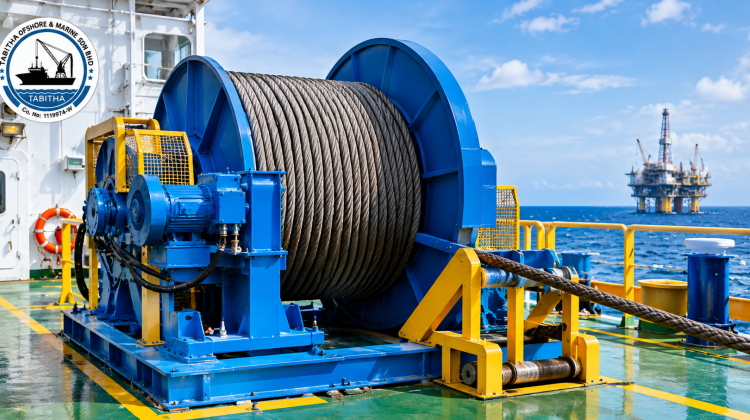
A spooling machine is a special purpose machine used in the process of winding and unwinding to regulate the movement of the wire rope, cable, umbilicals, and so on. The system can include reel drives, braking systems, tension systems, guide systems, level-wind systems, and operator controls, depending on the application.
The equipment assists in ensuring a controlled line path as material moves off a supply reel to a crane drum, winch, storage reel, or any other destination. This is a designed method that is especially useful in the management of long, heavy, or high-value cables and ropes.
The proper arrangement is determined by the diameter of rope/cables, length, weight, the size of the drum, the necessary tension, the conditions under which it is to be used, and the nature of the equipment to which the material is to be applied.
Why Controlled Wire Rope Handling Matters
Wire Rope Handling needs not just a mere transfer of a rope between reels. The crushing, kinking, twisting, bending, abrasion, and uncontrolled tension may affect wire rope.
It is also advisable to keep the back tension at the right level when installing to ensure that the rope remains on the drum. Regular positioning minimizes the chances of disproportional layers and undesired overlapping as well.
Proper handling is particularly of concern in crane ropes, winch wires, mooring lines, towing systems, and other ropes that have high loads.
How Wire Rope Spooling Works
Wire Rope Spooling, in general, starts by positioning the supply reel and receiving drum in a suitable manner. The rope is then directed through the handling system as tension is constantly controlled during the transfer.
Hydraulic or mechanical drive systems can be used to control the movement of reels and the braking system depending on the equipment. Level-wind systems or guide rollers may be used to ensure that the rope is placed on the drum in such a way that the layer is appropriately placed.
Technicians are supposed to inspect the rope specification, the state of the drum, connecting points and equipment capacity, direction of the line, and work area before the operation. Operators must get a check tension, alignment, speed, and the state of the rope during the transfer.
Cable Spooling Equipment for Marine Applications
Cable Spooling Equipment can be set up to work with various forms of marine and offshore works. The customary arrangement can consist of powered reel stands, hydraulic drive, braking, tension control, guide frames, rollers, monitoring equipment, and appropriate control systems.
In the case of large offshore projects, equipment must be selected based on the deck space, the size of reels, the weight of the cables, the bending radius, pulling force, the speed needed, and the environment.
Umbilicals, subsea cables, hoses and other flexible products can also be handled with specialised systems. The equipment should be fitted to the product as various cables have varying mechanical constraints.
Offshore Cable Management
Offshore Cable Management is especially significant when cables are conveyed, laid, lifted, or put away, or when cables are exchanged between vessels and offshore plants.
Poor cable management may lead to unwarranted bending, uncontrolled movement, tangling, abrasion, or damage to protective layers. A reel-to-reel controlled process can assist in having an organised workflow and less manual handling.
The deck plan should also be taken into consideration in case of offshore campaigns. The equipment, reels, guides, access routes to personnel, lifting points, and emergency areas ought to be made in such a way that the operation can be undertaken without creating unnecessary hazards.
Marine Cable Handling and Safety
Marine Cable handing is a delicate task as deck works may involve heavy reels, moving equipment, accumulated energy, and variable weather conditions.
Operators ought to come up with an appropriate method statement and risk assessment before work is started. It is necessary to check equipment for obvious damage and to ensure that it is appropriate to the planned load and cable size.
Staff must avoid being in snap-back areas, pinch points, rotating machines, as well as places where the cable may shift without warning. There is also a need for communication between operators and supporting personnel, especially in starting, stopping, reversing, and emergency situations.
Applications in Offshore and Marine Operations
Many applications in offshore and marine environments can be spooled. The typical ones are crane wire repair, winch rope, transferring mooring lines, cable transfer, maintenance of subsea equipment, vessel maintenance, transferring reel to reel, and mobilisation of offshore projects.
It can also be applied in the process of inspection and maintenance where a rope that is already in use has to be removed, checked, kept, or set back in its position.
Specific installation must always be based on the rope or cable specification and workload requirements of the project.
Best Practices for Safe Spooling
Effective spooling processes require planning, the choice of equipment, and effective management. The receiving drum must be inspected prior to commencing work, and the rope or cable examined visually for probable damage, contamination, deformation, or any other factors that may influence handling.
Controlled layering is important because it is necessary to maintain appropriate tension during the process. Sudden acceleration, uncontrolled payout, excess loading of the sides, and sharp changes in cable path should be avoided by the operators.
Once that is done, the final set-up should be examined and the rope or cable fixed properly. Records on inspection, equipment information, and the operational information should also be maintained for future maintenance and traceability.
FAQs
Q1. What is a spooling machine used for?
Ans: It finds application in the regulation of the winding, unwinding, transferring, and handing over of the wire rope, cable, umbilicals, and so forth between reels, drums, winches, and so on.
Q2. Why is tension control in spooling important?
Ans: Maintained tension assists in steady winding and positioning, as well as minimizing the chances of loose layers, overlaps, undue movement, and unnecessary mechanical stress.
Q3. What are common locations of spooling systems?
Ans: They find applications in offshore platforms, vessels, shipyards, ports, crane operations, winch systems, underwater projects, marine maintenance, and industrial rope-handling.
Q4. Does the spooling equipment accommodate various types of cables?
Ans: Yes, appropriate systems can be adapted to various cables, wire ropes, hoses, and umbilicals. The equipment, however, should be chosen based on the diameter of the product, its weight, the requirements of bending and the limits of tension, and the conditions under which the equipment will be used.
Q5. What is to be inspected prior to wire rope spooling?
Ans: Before starting, the rope specification, the reel and drum condition, the equipment capacity, the alignment, points of connection, work area, tension requirements, and safety controls should be verified.
Q6. Is correct spooling the answer to lengthening the service life of a wire rope?
Ans: Proper handling can be used to minimize the unnecessary damage that may be caused by improper winding, overloading, crushing, and uncontrolled movement. There is, however, also dependence on the design, loading, operating conditions, lubrication, inspection, and maintenance in the life of the rope services.
Related Services
Conclusion
Cable management is a significant aspect of offshore and marine activities that are safe and controlled. A well chosen spooling machine can facilitate the controlled transfer of wire ropes, regular winding, and effective handling throughout the process of installation, maintenance, replacement, and storage of the machine.
The integration of appropriate Cable Spooling Equipment, proper Wire Rope Handling protocols, controlled tension, skilled employees, and proper inspection can assist the offshore and marine crews to enhance operational control and minimize unnecessary damage that may occur during handling.
Spoiling in demanding marine and offshore projects should be considered an engineered process and not merely a technique of transferring cable between reels. Effective and safe cable and wire rope management is more rooted in proper planning and selection of equipment.