Rigging Works: Complete Guide to Safe Industrial Lifting and Rigging Services
The two main pillars of a successful industrial operation involving heavy movement are precision and safety. Rigging works are the sophisticated operation of loading by means of special equipment, such as slings, shackles, and cables, so that they can be transported and put in place safely. Industrial rigging services, particularly in high-stakes industries such as offshore, marine, construction, and oil and gas, may be the difference between an effective installation and a disaster.
At Tabitha Offshore, we know that, be it the transportation of a multi-tonne turbine or fitting the modules of an offshore platform, heavy lifting rigging jobs need the experience of qualified rigging contractors in order to decrease the risk factor and to ensure the highest level of operational efficiency.
What Are Rigging Works and Why Are They Important?
Fundamentally, rigging is the connection between a crane and the load that is carried. Basic lifting and rigging activities do not simply mean knot tying, but are highly specialized and demand a combination of physics, load-weight analysis, and a close knowledge of the principles of center-of-gravity.
The Effect of Professional Rigging Solutions
The use of specialized load rigging methods is important due to three reasons:
- Structural Integrity: Structural rigging services guarantee against the load bending or breaking on its way.
- Risk Mitigation: Proper rigging will avoid damage to equipment and people from falling objects.
- Precision of Operation: With the use of sophisticated rigging methods, heavy machinery can be installed in cramped industrial areas with millimeter precision.
Industrial Rigging Works: Comparing Solutions for Your Project
The importance of identifying the appropriate approach lies in the surrounding and also the complexity of your load. The following is the breakdown of the application of different heavy lifting solutions:
| Rigging Category | Primary Equipment Used | Best Application | Key Benefit |
| Mechanical Rigging | Chain hoists, skates, jacks | Industrial plant maintenance | Precision in tight spaces |
| Structural Rigging | Spreader bars, wire rope | Construction and steel erection | Even weight distribution |
| Offshore Rigging | High-tensile slings, shackles | Platform & subsea modules | Marine strength |
| Crane Rigging | Multi-leg slings, hooks | Heavy load handling | Maximum lift capacity |
Types of Industrial Rigging Works
Each industrial setting is challenging. There are three basic categories of rigging that are specialised by professional providers:
1. Mechanical and Structural Rigging
This entails mechanical rigging at factories and refineries. It involves the installation of boilers and heavy equipment rigging of manufacturing lines. Rigging on an industrial plant may involve operation in a narrow area inaccessible to conventional cranes.
2. Crane & Load Handling Rigging
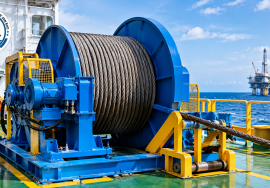
Crane rigging services specialize in the connection between the crane hook and the cargo. This involves diverse load handling systems and heavy load handling equipment that is sensitive to the geometry of the object to be lifted.
3. Offshore & Marine Rigging
Wave motion in the saline environment is unpredictable, and therefore, special offshore rigging works are required. Ever since platform rigging work, shipyard rigging services use corrosion-resistant gear and dynamic loading calculations.
Equipment Used in Professional Rigging Works
The weakest link of a lift makes the lift as reliable as possible. The inspection of rigging equipment is an obligatory prerequisite to any operation.
The lifting contractors in industries use:
- Slings and Shackles: The connections that are used as the major connectors of any rig.
- Lifting Gear Inspection: Periodic NDT- inspections ascertaining that there is no internal fatigue.
- Hardware and Tools Hardwiring and Rigging Turnbuckles, eye bolts, and spreader beams.
- Industrial Lifting Tools: Chain hoist and lever pulls are to be manually operated.
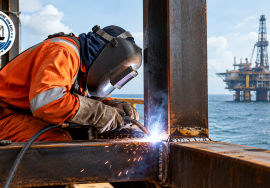
- Rigging Safety Equipment: Fall Arrests of technicians at height.
Why Choose Tabitha Offshore for Professional Rigging Works?
In the case of critical lifting operations, there is the aspect of experience and safety. Tabitha Offshore provides efficient and dependable rigging services with the support of experienced technicians and equipment.
The Safety Meets Economically
A sudden accident may cost millions of repair and loss of time. When hiring certified rigging technicians, you are not buying a service; you are buying money security. Our proactive rigging project management makes sure that risks are identified before they happen, ensuring that your budget is not affected and that your people are also safe.
Key Reasons to Choose Us:
- Professional Rigging Personnel: International safety standards (ISO 9001, 14001, and OHSAS 18001).
- Modern Lifting Devices: We employ the best lifting devices in industrial work.
- Severe Safety Adherence: We are focused on conducting risk assessments to reduce operational risks.
- Extensive Offshore Experience: Great knowledge of marine rigging services and oil and gas rigging activities.
- On Time Delivery: Due to effective project management, your schedule will be achieved without sacrificing safety.
Ready to Secure Your Next Heavy Lift?
Do not take chances with the security of your assets. However much work you have, whether it be an offshore location, a shipyard project, or the maintenance of a plant, it must have certified knowledge and a high capacity equipment to ensure smooth completion.
Rigging Services provided by experts include:
- In-depth Lift Planning and Risk Assessment.
- Certified Onsite Rigging Technicians.
- Capacity Rigging Equipment Rental and Inspection.
- Oil and Gas and Marine Turnkey solutions.
Contact Tabitha Offshore Today to carry out safe and professional rigging works to suit your project requirements. Allow our professionals to lift your loads exactly and with accuracy.
Frequently Asked Questions
Q1: What is the use of rigging works?
Ans: They are employed to transfer, manoeuvre, and place heavy equipment or structural elements in industrial and offshore settings in a safe manner.
Q2: What is the rationale for employing industrial lifting contractors?
Ans: Professional contractors are able to offer the technical expertise to calculate the load stress and make sure that all the operations are in line with the international safety requirements, which avoids accidents.
Q3: What would proper rigging project management conserve money?
Ans: It eliminates the risk of equipment damage, controllable downtime in case of accidents, and provides maximum efficiency of lifting machinery due to professional planning.
Conclusion
To conclude, it is impossible to overestimate the significance of rigging works in safe lifting. From the first rigging safety equipment inspection to the last fixation of a multi-ton module, the contribution of certified rigging contractors is the key to the success of industries.
Using Tabitha Offshore, companies are sure that their projects will not be violated, their property will not be destroyed, and their employees will be safe. Professional rigging solutions are not merely about the transfer of heavy loads, but it is also the safeguarding of the future of your project in technical accuracy and safety standards that only a leader in the industry as Tabitha Offshore, could deliver.